The Peacemaker
the peacemaker · Gut Center
Edited by the EnneagramGenius editorial desk · Reviewed 2026-09-05
“Nines are motivated by a need for inner and outer peace.”
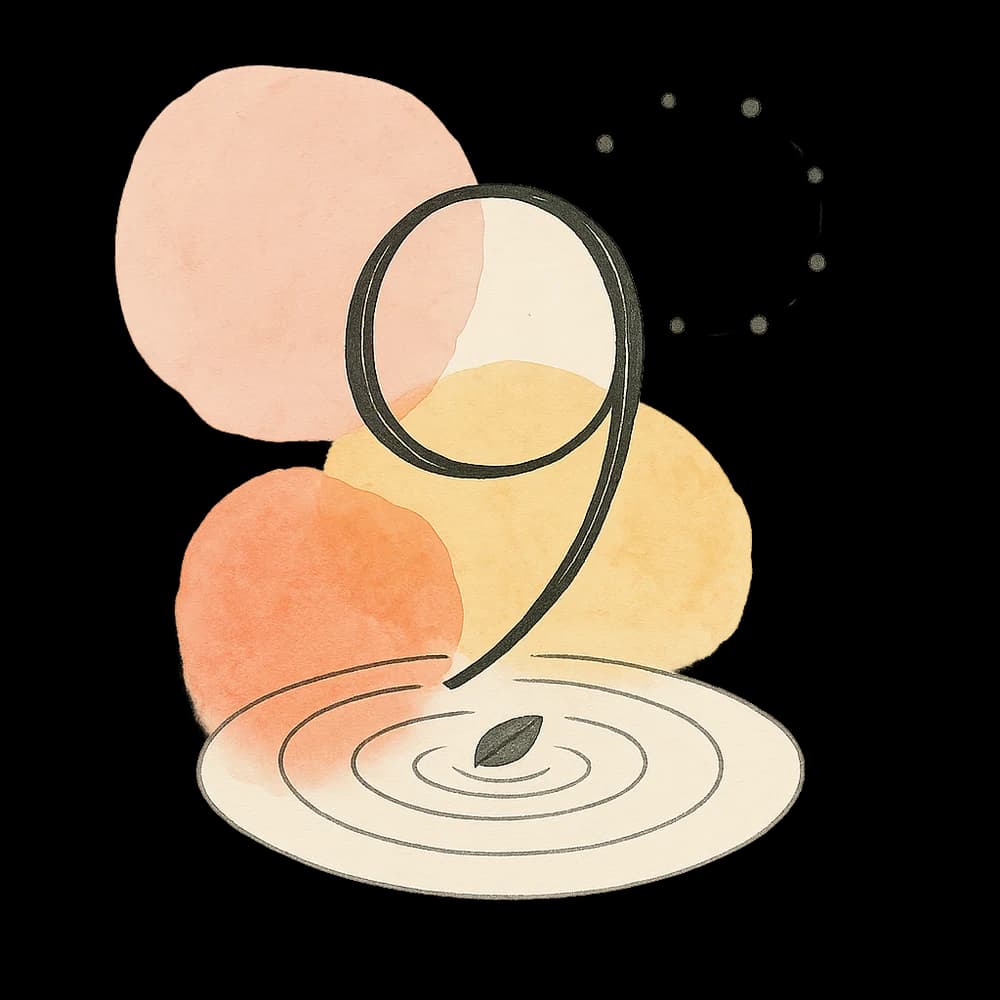
At their best, Type 9s are present, self-assertive, and grounded in their own priorities: their calm becomes active rather than avoidant, and the room is better for their voice.
On Type 9 · The Peacemaker
About this type
Type Nines are the Enneagram's great connectors: empathic, non-judgmental, and gifted at seeing the world from many points of view simultaneously. They create environments where people feel safe, accepted, and heard. Nines have a remarkable ability to merge with others' perspectives, which makes them natural peacemakers, mediators, and counselors.
The shadow side of this gift is a pattern of self-erasure. Nines learned early that their own presence (their needs, opinions, and desires) was less important than the maintenance of harmony. As a result, they can become highly skilled at being whoever the room needs them to be, while losing track of who they actually are. Growth for Nines means the difficult and liberating work of showing up: asserting a preference, taking a position, and trusting that their presence is a gift the people around them actually need, rather than the disruption they fear.
Core pattern
- Core motivation
- Nines are motivated by a need for inner and outer peace. They orient toward harmony, accommodation, and the smoothing of conflict, driven by a deep desire to belong and to avoid fragmentation in themselves or their world.
- Core fear
- Loss, separation, or conflict: anything that disrupts the sense of peace and connection they work so hard to maintain.
- Core desire
- To have inner stability and harmony: to feel connected to themselves, others, and the larger whole.
- Fixation
- indolence / self-forgetting
- Holy idea
- holy love
- Passion
- sloth
- Virtue
- right action
At a glance
Strengths
- Natural mediation skill and ability to hold multiple perspectives
- Grounded, calming presence in tense or uncertain situations
- Inclusive warmth that makes everyone feel welcome
- Steady endurance and quiet persistence over time
Blind spots
- Going along with plans they don't actually want, and then resenting it
- Mistaking stubbornness for standing their ground
- Disappearing from their own life to avoid disrupting anyone else's
- Believing their presence is optional
Under stress
Under stress, Nines move toward Type Six, becoming anxious, worried, and reactive rather than centered. They lose their characteristic steadiness and begin seeking external reassurance they cannot internally provide.
At best
Present, self-assertive, and grounded in their own priorities: their calm becomes active rather than avoidant, and the room is better for their voice.
Growth path
At their best, Nines integrate toward Type Three, developing drive, self-assertion, and the capacity to act on their own behalf without waiting for permission. They discover that taking up space and advocating for themselves creates more authentic connection, and that the peace survives it.
Levels of development
From Riso, D. R., & Hudson, R. (1999). The Wisdom of the Enneagram. Bantam Books. Condensed from nine levels to three ranges.
Healthy
Healthy Nines are awake to themselves. They remain receptive and easygoing, but they no longer disappear into the room: their preferences are findable, their energy is available, and their presence has weight. They can hold many sides of a conflict without losing their own ground, which makes them genuine peacemakers rather than absentees. Anger, when it arises, is felt cleanly and used as information instead of leaking out as stubbornness. At this range, the Nine's gift for union becomes a form of leadership: they help everyone, themselves included, belong without anyone having to disappear.
Average
Average Nines drift into self-forgetting. They go along to keep the peace, agreeing on the surface while quietly checking out underneath, and small comforts (routines, snacks, scrolling, background tasks) start to crowd out what actually matters to them. Conflict is sidestepped early, often before it's even named, and their own preferences get harder to locate the longer they accommodate. The agreement is real but the contact isn't; they're present in body, partially absent in self. Resentment accrues in a slow, unacknowledged way and tends to surface as stubbornness, lateness, or quiet withdrawal rather than direct words.
Unhealthy
Unhealthy Nines dissociate from their own lives. The self-forgetting deepens into numbness, depression, and a kind of waking sleep where even basic needs (appointments, bills, health, relationships) go unaddressed for long stretches. Stubbornness hardens into immovable passivity: they cannot be pushed, but they also cannot mobilize themselves, even when the cost of inaction is severe. Buried anger may erupt unexpectedly or, more often, calcify into a flat, resigned refusal to engage. The peace they once protected has become a fog they can't find their way out of, and the quiet conviction that they don't really matter starts to feel like fact.
Often confused with
The Enneagram only works when you have your type right. These are the types most often mistaken for Type 9, with motivation-grounded distinctions.
Both move toward others, for different reasons
Twos move toward others to be needed, chosen, and indispensable; their attention actively seeks out what someone else requires. Nines merge to keep the peace and avoid the disturbance of difference: accommodation is passive, a way of not making waves rather than a bid for love.
Read about Type 2Inwardness that intensifies vs. inwardness that numbs
Both can look melancholic, quiet, and lost in their own world. Fours amplify feeling to find and assert a unique self; Nines dampen feeling to preserve harmony, and rather than searching for an identity, they're often forgetting they have one.
Read about Type 4Withdrawal to think vs. withdrawal to not be disturbed
Both can appear low-energy, private, and slow to engage. Fives retreat to conserve resources and build a rich inner conceptual world; Nines retreat to avoid friction and stay comfortable, and the inner space tends to be quieter, softer, and less articulated than a Five's.
Read about Type 5Wings
Type 9 sits between Types 8 and 1 on the Enneagram circle.
Arrow lines
Each Enneagram type has two arrow lines connecting it to other types: growth and stress.
Type 9 moves toward Type 3: The Achiever when developing.
Type 9 moves toward Type 6: The Loyalist under pressure.
Centers of intelligence
Nines belong to the Gut center, along with Types 1 and 8. Gut types care, deep down, about staying in charge of their own life, but Nines handle that concern in a surprising way: they set themselves aside to avoid the conflict that asserting themselves might stir up. Where Eights push outward and Ones turn inward into discipline, Nines blend into other people's rhythms and points of view. The heart of a Nine's growth is waking back up to their own presence.
Your tritype
As a member of the Gut center, Type 9 brings groundedness, inclusive presence, and the capacity to hold complexity without judgment. The dominant Heart and Head types shape whether the Nine's calm expresses as warm, ambitious, thoughtful, or cautious.
One type from each of the three centers (Gut, Heart, and Head) gets a say in how you operate. Your tritype names all three, starting with your core type and continuing clockwise around the circle, so a Type 1 with 4 and 6 is written 1-4-6. The combination shapes how your core type actually lands in the world.
Take the test to discover your full tritypeType 9 in relationships
Nines are among the most comfortable partners in the Enneagram: non-judgmental, warm, steady, and genuinely delighted to share life with someone. They are rare listeners, capable of making a partner feel completely accepted without the subtle pressure other types can bring to love. A long-term partnership with a healthy Nine is often described as the easiest relationship in either person's life.
The shadow side is a slow erosion of the Nine's own self. In the service of harmony, a Nine can defer preferences, swallow small resentments, and gradually disappear from the partnership as a distinct person, until the resentments build up and emerge as stubbornness or quiet withdrawal. Growth for a Nine in love means the counterintuitive work of showing up more, not less: naming preferences, engaging in the conflict the relationship actually needs, and trusting that their full presence will strengthen the bond rather than threaten it.
Type 9 at work
Nines are the Enneagram's natural diplomats and team-builders. They bring calm, inclusiveness, and the ability to hold multiple perspectives without dismissing any of them. They excel in mediation, counseling, facilitation, team leadership where consensus matters, and any role that rewards steadiness and the ability to make people feel heard.
The work-life challenge for a Nine is around initiative and priority. A Nine can drift through low-importance tasks while the important ones sit untouched, struggle to say no to additional work, and resist making decisions that might displease someone. The best managers give them explicit priorities, build in accountability structures that don't feel controlling, and help them recognize that their assertive voice is actually what the team wants from them.
How Type 9 connects with other types
Every pairing has its own rhythm, tensions, and gifts. Explore how Type 9meets each of the nine types, including another Type 9.
Type 9 & Type 1
The Peacemaker + The Reformer
Type 9 & Type 2
The Peacemaker + The Helper
Type 9 & Type 3
The Peacemaker + The Achiever
Type 9 & Type 4
The Peacemaker + The Individualist
Type 9 & Type 5
The Peacemaker + The Investigator
Type 9 & Type 6
The Peacemaker + The Loyalist
Type 9 & Type 7
The Peacemaker + The Enthusiast
Type 9 & Type 8
The Peacemaker + The Challenger
Type 9 & Type 9
Two Peacemakers
Notable examples
Widely cited examples based on public information. Interpretive, not definitive.
Explore neighboring types
Is this your type?
Take the free EnneagramGenius assessment to find out for certain.
Start free assessment