The process
A test. A letter. A practice.
An invitation.
How EnneagramGenius turns about 15 minutes into a clearer read on yourself and the people around you.
02Step I · Take the test
About 15 minutes. No account.
You start instantly. No signup, no email, no credit card.
Every question is forced choice. Most give you 4 sentences that could all be true of someone, and you pick the one that’s most true of you. The instinct questions and the follow-ups give you 2. No sliders, no agree/disagree, no middle box to hide in.
The core is the same for everyone: 36 items about what drives you, 9 more that sort your instincts. Your answers then choose the last few, the ones that settle your wing and your growth and stress lines. About 54 questions · extra follow-ups if needed. About 15 minutes. You finish with your core type, wing, tritype, and instinct stack, and a confidence band in plain words: high, medium, or low.
When a plan I care about falls apart, my first move is to…
03Step II · Your letter
A long-form letter about how you work.
Your results page is a full read of your profile, written to you, about you. What drives you, what pressure does, where your attention goes when you’re balanced, and where it goes when you’re not.
Every result includes your wing, your tritype, and your instinct stack.
4w5 · so/sx/sp · tritype 4-7-8
“You metabolize longing into meaning. Your work reaches people because you refuse to skip the ache.”

04Step III · Save & grow
Save it. Grow with it.
Finish the test, add your email, and your result lives in a free account. From there your profile opens into guidance you can actually use: type-specific insights, reflection prompts, and small practices matched to your pattern.
It stays live, so it deepens as you do.
4w5 · so/sx/sp · tritype 4-7-8
05Step IV · The invitation
Invite the one you’re thinking about.
At the bottom of your profile there’s a link. Send it to your partner, your co-founder, your mother, your oldest friend. They take the same free test.
When they finish, your pairing read opens: how the 2 of you actually meet, in the context you pick. Your first pairing read is free.
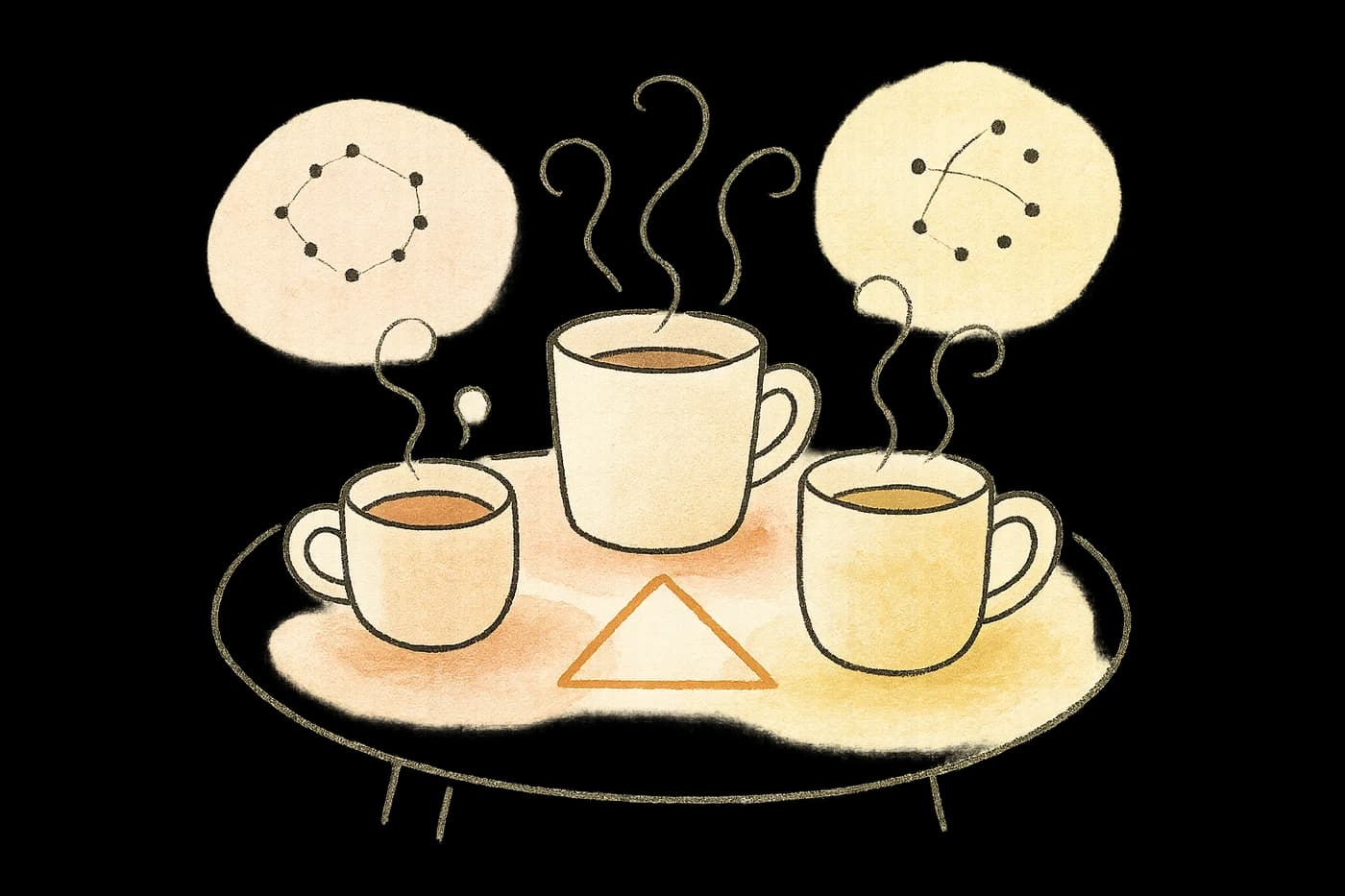
06Step V · Together
Read it together.
As soon as the second person finishes, you can open the pairing read. It’s written from both full profiles and the context you choose: couple, family, friendship, or team.
Read the first section out loud. Chat about it. Come back for more.
Neither read is wrong. They’re speaking from different centers: Maya from the heart, Jordan from the gut. The work is to translate.
07Why it feels personal
Written about you, in your context, kept current.
- 01
Full profiles, in full
The writing draws on the core type, wing, tritype, and instinct stack of each person. It anchors on what is actually specific about you.
- 02
Context sets the voice
“Couple at year 6” reads differently than “sibling check-in” or “leadership team in a re-org.” You choose the context. The tone, examples, and suggestions follow.
- 03
Alive by default
Your pages update as people join and as you tell it more. Take the free test once and everything stays current from there.
08Begin
Fifteen minutes to start a lifetime of growth.
Then it’s yours. To read, to keep, to share when you’re ready.