The Loyalist
the loyalist · Head Center
Edited by the EnneagramGenius editorial desk · Reviewed 2026-09-05
“Sixes are motivated by a need for security and support.”
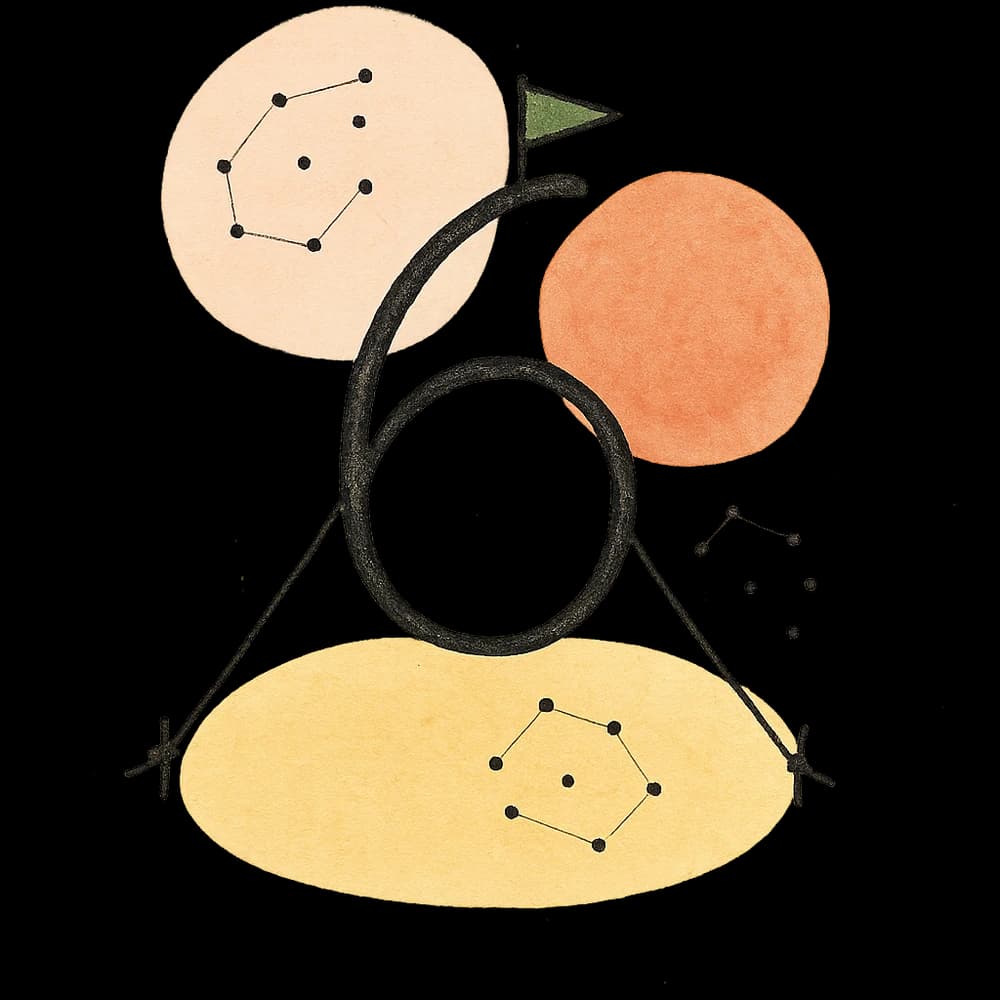
At their best, Type 6s are courageous, self-trusting, and grounded in their own authority: their doubt becomes discernment rather than a cage.
On Type 6 · The Loyalist
About this type
Type Sixes are the Enneagram's great loyalists: deeply committed to the people, institutions, and causes they trust, and acutely attuned to anything that might threaten those bonds. They are gifted troubleshooters, natural collaborators, and tend to bring a rigorous skepticism to received wisdom that makes them excellent at stress-testing ideas.
The core dynamic for Sixes is an ongoing negotiation with doubt. They doubt others (is this person or system actually trustworthy?) and they doubt themselves: am I capable of handling what might come? Both forms of doubt can be exhausting to live with and can lead to excessive reassurance-seeking or, in the phobic-counterphobic split, to provocative risk-taking as a way of challenging their own anxiety. Growth for Sixes means developing trust in their own perception: learning that their inner compass is actually quite reliable, and that security is something they generate from within rather than find outside themselves.
Core pattern
- Core motivation
- Sixes are motivated by a need for security and support. They orient toward anticipating threats, questioning authority, and building alliances, all in service of feeling safe enough to move forward.
- Core fear
- Being without support, guidance, or certainty: being abandoned to face an uncertain world alone.
- Core desire
- To have security and support: to find the reliable guidance and loyal community that makes risk-taking feel possible.
- Fixation
- cowardice / doubt
- Holy idea
- holy strength / holy faith
- Passion
- fear
- Virtue
- courage
At a glance
Strengths
- Exceptional foresight and risk assessment
- Deep loyalty and reliability in committed relationships
- Courage born from facing rather than avoiding fear
- Collaborative instinct and skill at building trust
Blind spots
- Mistaking their own worst-case imagination for realistic threat assessment
- Loyalty to people or systems that no longer deserve it
- Undermining their own authority by constantly seeking reassurance
- Treating their own intuition as suspect because it arrived easily
Under stress
Under stress, Sixes move toward Type Three, becoming competitive, image-conscious, and driven by a need to prove their worth through performance and status.
At best
Courageous, self-trusting, and grounded in their own authority: their doubt becomes discernment rather than a cage.
Growth path
At their best, Sixes integrate toward Type Nine, finding inner calm, self-trust, and the ability to act from their own authority rather than seeking external validation. They discover that their intuition is reliable and that they can be their own source of security.
Levels of development
From Riso, D. R., & Hudson, R. (1999). The Wisdom of the Enneagram. Bantam Books. Condensed from nine levels to three ranges.
Healthy
Healthy Sixes are internally trustworthy. They still scan, still ask 'what could go wrong', but the scanning has become discernment rather than dread, and they act on their own read of a situation without needing a chorus to confirm it. Faith in self runs alongside faith in the people and structures they've chosen to trust, and that double trust is what produces their distinctive courage: moving forward with the fear still present, without requiring certainty first. They are the steadying presence in a crisis precisely because they've been rehearsing the worst case for years and aren't shocked by it. Their loyalty, finally, includes themselves.
Average
Average Sixes live inside the back-and-forth: every plan, person, and decision gets stress-tested twice, and the second test is usually of the first. Doubt becomes a constant companion: scenario-running, reassurance-seeking, oscillating between trust and suspicion of the same source within a single afternoon. The phobic expression leans into authority and procedure, looking for the reliable structure that will hold; the counterphobic expression pushes against the very thing it secretly wants to lean on, picking fights with bosses and odds to prove it isn't afraid. Both moves are the same anxiety wearing different jackets. The inner ally and inner adversary trade off so quickly that the Six can't always tell which voice is theirs.
Unhealthy
Unhealthy Sixes lose the boundary between inner and outer threat. The vigilance that once kept the team safe curdles into paranoia: projecting hostility onto allies, finding patterns of betrayal where there are none, abandoning trustworthy people as suspect while clinging to ones who confirm the worldview. The phobic side collapses into paralysis and reassurance-addiction; the counterphobic side erupts into reckless aggression, picking the fight before the fight can find them. Underneath both is a single move: the inner threat (the unbearable suspicion of one's own untrustworthy judgment) gets cast outward and attacked there, because attacking it inside is intolerable.
Often confused with
The Enneagram only works when you have your type right. These are the types most often mistaken for Type 6, with motivation-grounded distinctions.
Vigilance can look like rectitude
Ones scan for what's wrong against an internal standard; Sixes scan for what could go wrong against external threat. Both can argue forcefully but for different reasons: the One is defending the right answer, the Six is stress-testing whether the answer will hold.
Read about Type 1Loyalty is not the same as warmth-as-currency
Sixes secure trust through commitment and reliability; Twos through warmth and indispensability. Sixes ask 'is this person safe?'; Twos ask 'do they need me?'. A Six tests before bonding; a Two bonds and hopes the test never comes.
Read about Type 2Counterphobic intensity is not identity-seeking
Counterphobic Sixes can read as intense and contrarian like Fours. Fours orient to identity through felt particularity; Sixes to safety through testing. The Four is asking 'who am I, really?'; the Six is asking 'is this ground solid enough to stand on?'.
Read about Type 4Wings
Type 6 sits between Types 5 and 7 on the Enneagram circle.
Arrow lines
Each Enneagram type has two arrow lines connecting it to other types: growth and stress.
Type 6 moves toward Type 9: The Peacemaker when developing.
Type 6 moves toward Type 3: The Achiever under pressure.
Centers of intelligence
Sixes belong to the Head center, along with Types 5 and 7. Head types are quietly managing anxiety. The question underneath is 'What will keep me safe?' Sixes answer it by staying prepared: building alliances, doing the homework, and imagining what could go wrong before it does. Where Fives retreat into expertise and Sevens keep moving, Sixes ask 'but what if?' It's both their genius and their burden.
Your tritype
As a member of the Head center, Type 6 brings loyalty, diligence, and risk awareness to any tritype. The dominant Heart and Gut types determine whether that vigilance expresses as warm, ambitious, grounded, or quietly steady.
One type from each of the three centers (Gut, Heart, and Head) gets a say in how you operate. Your tritype names all three, starting with your core type and continuing clockwise around the circle, so a Type 1 with 4 and 6 is written 1-4-6. The combination shapes how your core type actually lands in the world.
Take the test to discover your full tritypeType 6 in relationships
Sixes are among the most loyal partners in the Enneagram: once they trust you, they are in for the long haul, and they work hard to earn and keep trust in return. They are rigorous about commitment in a way many other types are not, and they show up for the practical reality of a relationship: the bills, the logistics, the hard conversations, the crisis at 2 a.m.
The tension in Six relationships is usually about doubt. The same inner radar that makes a Six a brilliant partner in adversity can turn relentlessly inward, generating anxiety about whether the relationship is right, whether the partner is trustworthy, whether the Six themselves is lovable. Reassurance-seeking can strain a partner who doesn't understand it as a nervous-system phenomenon rather than a genuine lack of trust. Growth for a Six in relationship means learning to distinguish real signals from noise, to trust their own perception, and to build the security they've been seeking externally from within.
Type 6 at work
Sixes are natural troubleshooters and team players. They are collaborative, conscientious, and genuinely invested in the success of the group, not in individual glory. They excel in roles that reward preparation and risk assessment: operations, compliance, engineering, project management, medicine, law, crisis response.
The workplace challenge for a Six is around anxiety and authority. They can get stuck in analysis paralysis, struggle to trust their own decisions without seeking validation, and either rebel against or over-rely on hierarchy. The best environments offer clear expectations, psychological safety, explicit feedback, and managers who recognize that a Six's worst-case thinking is often exactly what keeps the project on the rails.
How Type 6 connects with other types
Every pairing has its own rhythm, tensions, and gifts. Explore how Type 6meets each of the nine types, including another Type 6.
Type 6 & Type 1
The Loyalist + The Reformer
Type 6 & Type 2
The Loyalist + The Helper
Type 6 & Type 3
The Loyalist + The Achiever
Type 6 & Type 4
The Loyalist + The Individualist
Type 6 & Type 5
The Loyalist + The Investigator
Type 6 & Type 6
Two Loyalists
Type 6 & Type 7
The Loyalist + The Enthusiast
Type 6 & Type 8
The Loyalist + The Challenger
Type 6 & Type 9
The Loyalist + The Peacemaker
Notable examples
Widely cited examples based on public information. Interpretive, not definitive.
Explore neighboring types
Is this your type?
Take the free EnneagramGenius assessment to find out for certain.
Start free assessment